Before you design anything
Most firstcollections dieat the invoice.
I want to make styles in colours, costing about $ each to make.
What that costs before you sell anything
Same collection. Four ways to run it.You have proof people want it and you want a better unit cost without betting the business on one order.
You pay for everything before you sell anything, and unsold stock is money sitting in a box.
- Cash before launch
- $11,920 – $46,400
- Of which samples and patterns
- $4,000 – $20,000
- Customer pays
- $66 – $110
- You keep, per piece
- $44 · 67%
Brief
What the collection is for, and what it has to cost.
Can't move on until a price architecture and a delivery date, both signed off.
2–5 days · your call
Fabric and production are most of the calendar. Everything else is waiting on a decision.
The same garment, four times.
Each one exists to answer a different question, and each one is only allowed to answer its own. Judging fit off a proto made in the wrong cloth is the standard, expensive mistake.
- 07
Proto
10–21 daysFirst physical garment, in whatever cloth was to hand.
Can't move on until the construction is approved — fit is explicitly not judged here
- 08
Fit
14–28 daysCorrect cloth, on a body, measured point by point.
Can't move on until every measurement is inside tolerance
- 09
PP
10–21 daysCorrect fabric, trims and labels, made on the line that runs the order.
Can't move on until both sides have signed and sealed it — bulk is judged against this one
- 10
TOP
21–60 daysPulled out of the bulk run itself.
Can't move on until it matches the sealed PP, or the bulk does not ship
One room · one camera · one light
So the difference you see is the cloth.
Every fabric is photographed over the same plinth, in the same fold, under the same light, casting the same shadow. Nothing in the frame changes except the thing you are choosing — which is the only way a comparison between six fabrics means anything.
A factory doesn't ask questions. It decides.
Anything left out of the specification is a decision someone else makes at two in the morning, in your favour or not. Fill one in and watch what it is worth.
Leave it out and the factory cannot tell two similar styles apart, and revisions get applied to the wrong one.
Leave it out and construction is guessed. Flats are proportional line drawings, not fashion illustration — the factory reads them as a plan.
Leave it out and there is no definition of correct, so nothing can be rejected. This is the single most common cause of a dispute nobody can win.
Leave it out and the factory substitutes. Substitution is not usually malice — an unspecified trim is a decision someone has to make, and they will make it.
Leave it out and construction defaults to whatever is cheapest on that line, which changes the hand, the durability and the drape.
Leave it out and colour is matched to a screen, and screens disagree. Every colour needs a physical reference.
Leave it out and goods arrive unsellable and legally non-compliant — fibre content and care labelling are statutory in most markets.
Leave it out and structured garments collapse. Irrelevant on an unstructured piece, which is why this one is optional.
Leave it out and placement drifts. 'Centre front chest' is not a measurement; a distance from the shoulder seam is.
Leave it out and failures surface after bulk, when the whole run is already made and the only options are write-off or sell-through.
Also on this table
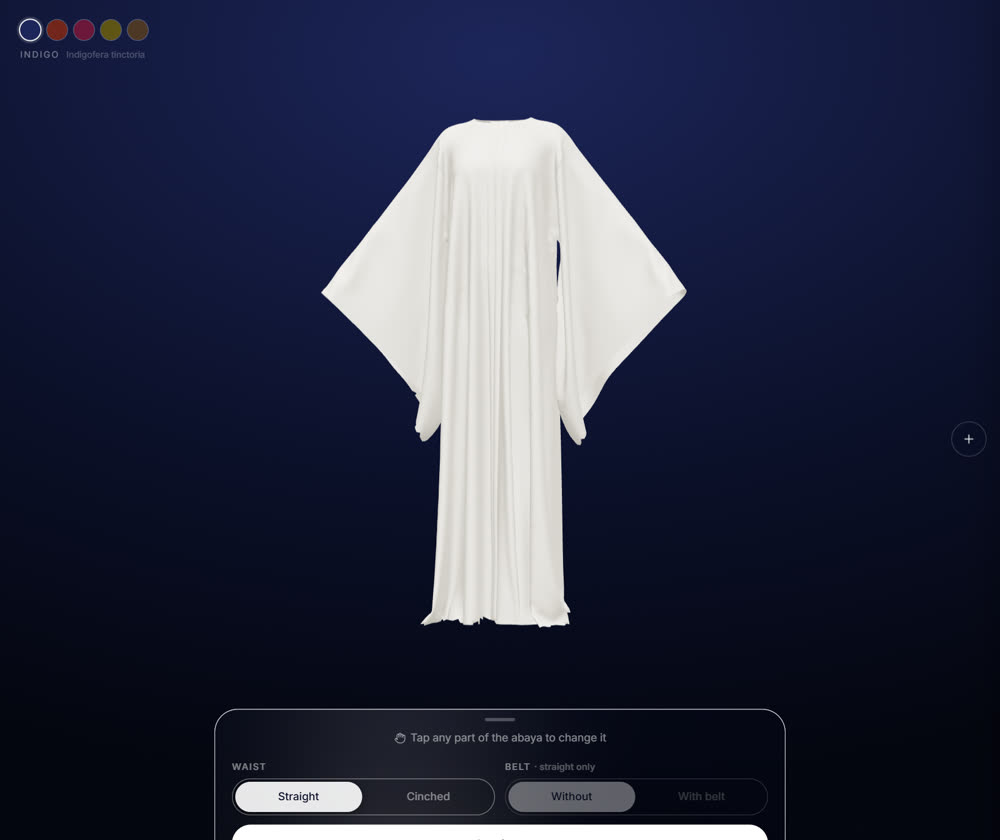
Design one, in the cloth, before you commit to any of it.
Choose a silhouette, choose the fabric panel by panel, and see it photographed. It costs nothing, and it settles arguments that otherwise get settled by a sample.
Open the studio→
Take one style all the way first.
One garment, through every stage, to something you can hold. It costs a fraction of a collection and tells you everything a collection would have — while you can still change your mind.
Tell us what you have→